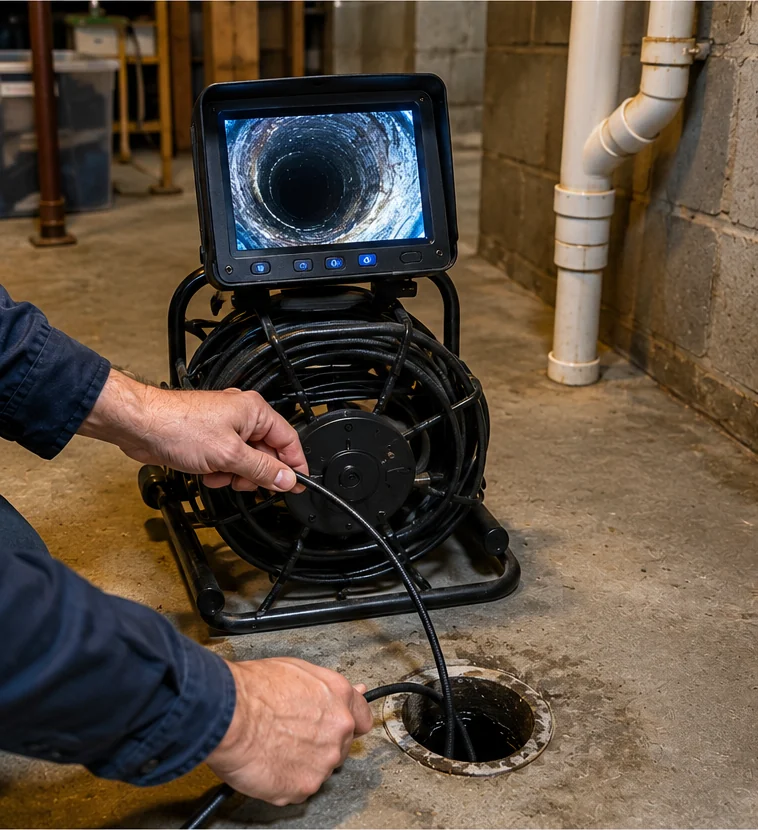
See the hidden pipe before you own it
We run a video camera down the home's lateral line all the way to the city main — surfacing the bellies, root intrusion, cracks and collapses no standard inspection can reach.
The single most expensive defect in a Hastings home is the one buried four feet underground. A sewer scope feeds a self-leveling video camera into the home's sewer cleanout and drives it the full length of the lateral — the private pipe that carries everything from the house out to the city main beneath the street. What comes back on screen is the difference between a routine closing and a four-figure surprise the week after you move in.
Why this matters more here
Hastings is an old river town. Much of the housing stock around the downtown core and the older east side was built well before 1960, and those homes were plumbed with vitrified clay tile or cast-iron laterals. Both age the same way: clay joints separate and invite tree roots; cast iron rusts from the inside until the pipe channels, scales, and finally collapses. The mature boulevard elms and silver maples that make these streets beautiful are also the number-one cause of root-choked lines. Add the settling soils along the Mississippi bluffs, which let a pipe sag into a "belly" that traps waste, and you have a setting where a sewer scope routinely earns its keep.
None of this shows up in a visual home inspection, a radon test, or even a careful walk of the basement. The drains run clear during a ten-minute showing because the line only backs up under real household load — three loads of laundry, a full dishwasher, a houseful of guests. By then you own it.
What the camera looks for
We don't just confirm the line drains — we document its condition end to end so you know exactly what you're buying.
- Root intrusion at clay-tile joints and pipe transitions
- Bellies and low spots where waste and standing water collect
- Cracks, offsets, and full collapses in cast iron and clay
- Scaling and channeling that narrow an aging cast-iron line
- Grease, debris, and flushed obstructions blocking flow
- Failed prior repairs, bad transitions, and improper builder installs
- The connection point and approximate depth to the city main
An honest, independent read
Every scope is captured on video and the findings go straight into your inspection report, delivered within 24 hours and written to the InterNACHI Standards of Practice. We work for the buyer — never the seller, the agent, or a repair company that profits from the verdict — so if the line is sound, we say so plainly. When it isn't, the recorded footage gives you the leverage to negotiate a credit or a seller-paid repair before you sign, instead of writing the check yourself in month two.
A full line replacement from a Hastings home to the street can run well into five figures once you account for excavation, the road cut, and city permits. A scope is a fraction of that, and it pays for itself the first time it turns up a problem. We pair it naturally with a full buyer's inspection, and if the camera flags moisture or backups already affecting the basement, our radon and environmental testing and thermal moisture survey round out the picture below grade.
Four steps, one clear answer.
Confirm access
We verify the cleanout location before the appointment — basement, exterior, or, if needed, a pulled toilet.
Drive the line
The camera travels the full lateral to the city main while we narrate and record every foot of it.
Document defects
Roots, bellies, breaks, and obstructions are captured on video with their approximate location and depth.
Report in 24 hours
Footage and findings land in your report, ready to guide your next move at the negotiating table.