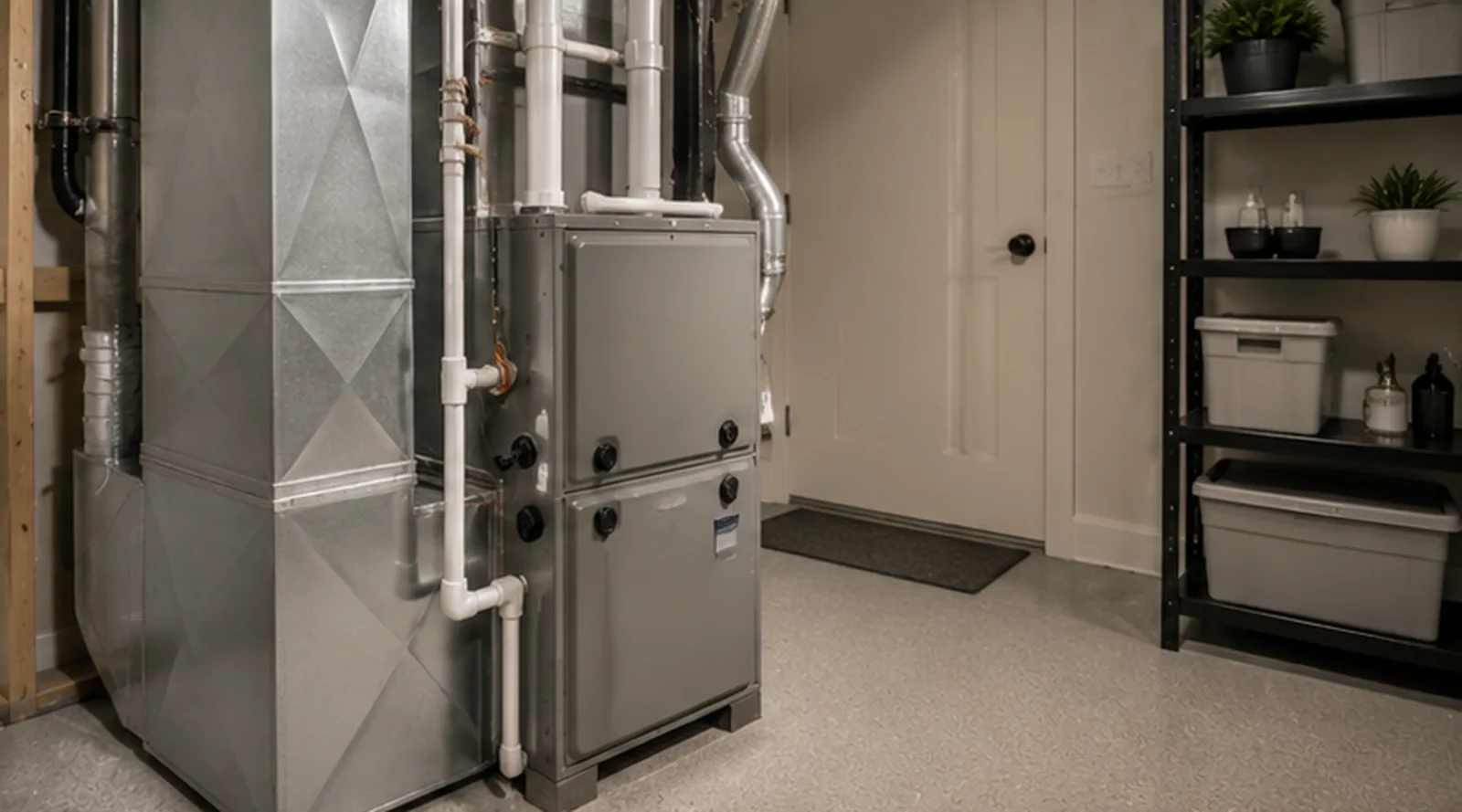
Heating & cooling, judged for a Minnesota winter
We assess the furnace, air conditioning, ductwork and controls — age, condition and safety — so you know whether the system will carry a Hastings home through January, and what it will cost to keep it that way.
In Hastings, the HVAC system is not a comfort feature — it is life-safety equipment. A furnace that fails in a hard Dakota County freeze can mean burst pipes, a flooded basement and an uninhabitable house within hours. Our HVAC inspection looks past the thermostat reading to the things that actually decide whether a system is safe, near the end of its life, or quietly costing you money every month.
We evaluate the heating and cooling equipment as the buyer's advocate, following the InterNACHI Standards of Practice. We confirm the furnace responds to a call for heat and runs through a full cycle, then examine it the way a service technician would: data-plate age, combustion venting, gas connections, the condition of the burners and the visible portions of the heat exchanger. Where access allows, we use thermal imaging to read heat patterns across registers and duct runs — a quick, non-invasive way to surface a leaking duct or a room that will never warm up. Everything we find lands in a clear report, delivered within 24 hours, with photos and plain-language priorities.
What we check.
From the furnace cabinet to the farthest supply register, we document the whole system and flag what matters before it becomes your problem.
- Furnace age, model and remaining service life from the data plate
- Operation through a full heating cycle and response at the thermostat
- Visible heat-exchanger condition, burners and flame characteristics
- Combustion venting, draft and condensate handling on high-efficiency units
- Gas connections, shutoff and signs of corrosion or improper repair
- A/C condenser age, refrigerant lines and function (weather permitting)
- Ductwork layout, visible leaks, disconnects and insulation
- Filter condition, return-air setup and overall airflow balance
Old furnaces, hard winters, real stakes.
Hastings runs deep on housing stock — the bluffs above the Mississippi and the streets behind downtown hold homes that have already cycled through two or three heating systems. We routinely meet 20- and 25-year-old furnaces still limping along, well past the point where a cracked heat exchanger becomes a genuine carbon-monoxide concern. Age alone doesn't condemn a unit, but it changes the math on your offer: a furnace at the end of its life is a near-term replacement you should be budgeting for, not discovering in February.
Cooling matters too. When the equipment is testable, we run the A/C and check the condenser, but Minnesota weather sets the rules — operating a compressor below roughly 60°F can damage it, so in cold months we inspect what we safely can and note the limitation honestly rather than risk the equipment. Ductwork is the quiet culprit behind many "this room is always cold" complaints we hear in both older Hastings homes and newer subdivisions: a single disconnected run in a joist bay can starve a bedroom for years.
Because furnace and water-heater issues so often share a flue and a mechanical room, an HVAC review pairs naturally with our broader buyer's inspection, and combustion-air and venting concerns frequently overlap with what we find on a radon test in this Zone 1 county. We connect those dots for you instead of leaving them in separate silos.